

Who owns water?
The debate about a water law reform, plus some thoughts on bots

Welcome to The Mexpatriate.
It seems a new moment has arrived: our rage isn’t against the machine, it’s made by the machine.
I previously covered the skeptical response to the “Gen Z” protests in Mexico, which were called out by President Sheinbaum as a bot-provoked campaign paid for by opposition political operatives. Exposing the interests behind the protests is important, though the self-satisfaction of the ruling party is somewhat unsavory. I wonder how purely organic and grassroots (I almost wrote grass-fed) any social or political movement is these days.
In a variation on this theme, a new feature launched on X this week has revealed many accounts spewing divisive content about U.S. politics aren’t based in the United States at all. They are harvesting viral engagement for cash, often using AI-generated content—social media networks pay creators more if they reach U.S. eyeballs.
As 404 Media reports: “The current disinformation and slop phenomenon on the internet today makes the days of ‘Russian bot farms’ and ‘fake news pages from Cyprus’ seem quaint; the problem is now fully decentralized and distributed across the world and is almost entirely funded by social media companies themselves.”
What brave new world of slop is this where we feel nostalgic for Russian bot farms?
In today’s newsletter, I hone in on the national conversation about Sheinbaum’s water law reform. But first, a few quick news highlights:
The biggest news of the week dropped Thursday night with news that Attorney General Alejandro Gertz Manero is stepping down. Gertz Manero, 86, was the first to hold the independent public prosecutor position when he was nominated by AMLO and ratified by the Senate in 2019, and he had two years left in his term. In his resignation letter he said President Sheinbaum had offered him the opportunity to serve as an ambassador (later reported to be as Mexico’s ambassador to Germany). Ernestina Godoy, the executive’s legal counsel, is taking over as interim attorney general and it seems likely she will be confirmed by the Senate next month. Gertz Manero is no stranger to controversy and there is speculation he was forced out because of his mishandling of high-profile corruption cases. Stay tuned for more coverage of this shakeup next week.
A flurry of arrests have been made in the case of the murdered mayor of Uruapan, Carlos Manzo, including an alleged CJNG (Jalisco New Generation Cartel) boss who plotted the assassination (“El Licenciado”), a cartel recruiter who is suspected of hiring the 17 year-old who pulled the trigger and seven of the eight municipal cops who were assigned to protect Manzo (the eighth is a fugitive). According to law enforcement, one of these cops executed Manzo’s killer after he had been subdued—with his own gun. Authorities have also said that the hit on Manzo was ordered by a top CJNG commander, Ramón Álvarez Ayala or “R1” who was arrested in 2012, but released in 2022 by a federal judge who is now under investigation. The Álvarez Ayala clan has tentacles in both politics and crime in the state of Michoacán—one of Ramón’s brothers, Roldán, was formerly the mayor of Apatzingán.
On Wednesday, President Sheinbaum announced that Mexico is going to build the most powerful supercomputer in Latin America. “Coatlicue” would have a 314-petaflop (had to look that one up) capacity, which is over 100 times faster than the country’s most advanced supercomputer today. The world’s fastest supercomputer is “El Capitan” in California—it has a 1,809-petaflop capacity.
Frida Kahlo has once again set a record in the art world. Her self-portrait “El sueño (La cama)” sold to an anonymous buyer for US $54.7 million at auction last week, the highest sales price ever for a female artist (the previous record was set in 2014 by a Georgia O’Keefe painting sold at an auction for US $44 million). While Kahlo’s face is arguably the most ubiquitous of any modern artist—thanks partly to a corporation her late niece established in Florida to trademark her image and sell licenses—her works rarely come up for auction because most of them are still in Mexico, where they are designated national cultural heritage and can’t be sold.
What’s a beauty pageant without scandal? Miss Mexico, Fátima Bosch, was crowned Miss Universe 2025 on Nov. 21, but her name had already been in the headlines after she stood up to a Thai pageant executive who was verbally abusive to her. Her victory seemed like a fairy tale ending for the green-eyed, fair-skinned princess, until Pemex posted a message congratulating Bosch. Yes, Pemex. Bosch’s father has been a high-ranking official in the oil company for almost 30 years, and it didn’t take long for reports to emerge that he has ties via Pemex to Raúl Rocha, the Mexican businessman who is CEO and co-owner of Miss Universe. Rocha left Mexico in 2011, though he still had business interests here (including as a contractor for Pemex); media outlets reported that there is a warrant out for his arrest on suspicion of drug and weapons trafficking, as well as fuel smuggling. Bosch may have to abdicate her title after some judges have claimed they were pressured to vote for her.

The debate over water regulation
Water rights have become another flashpoint between Mexican farmers and the government. At the end of October, farmers paralyzed major highways across the country, demanding government price guarantees for the grain in the context of falling global prices. An initial agreement was reached, but protests have continued sporadically in the past few weeks.
On Monday, the farmers—who also have a beef with Sheinbaum’s new national water law—were joined by truckers protesting insecurity, and set up road blockades in 17 states. On Friday morning, the Department of the Interior said an agreement had been reached with both groups, which would include modifications to the water bill.
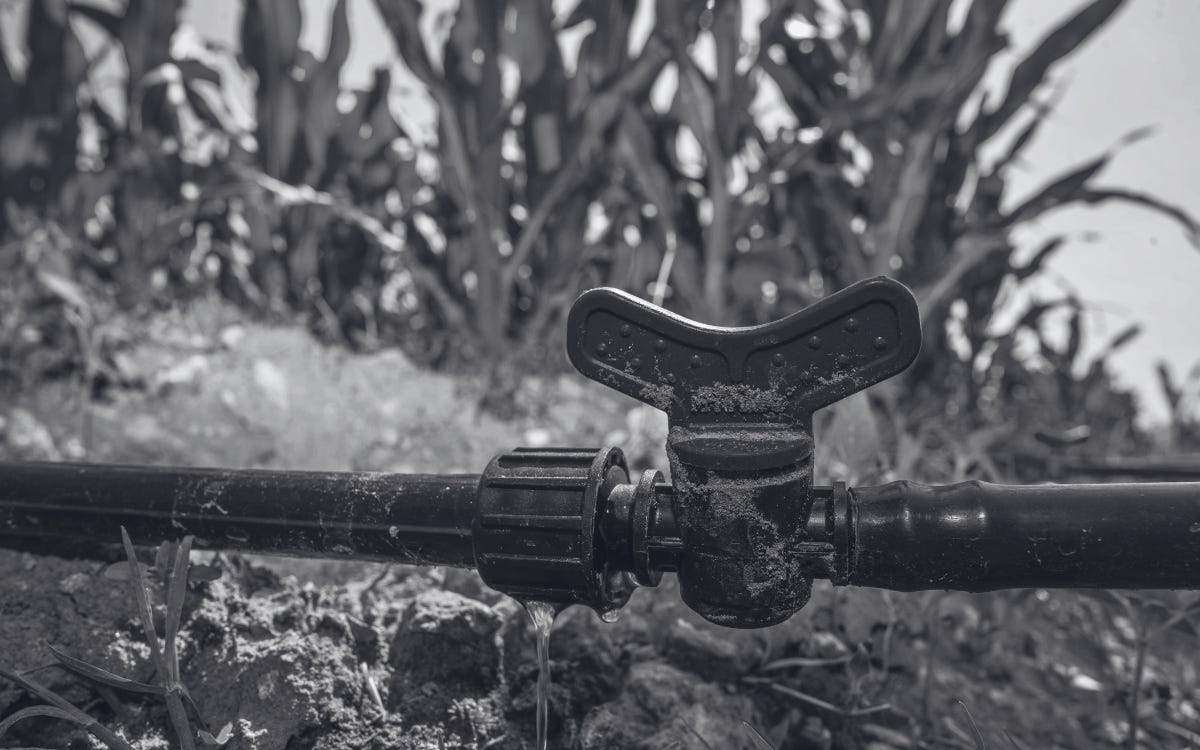
Both Peña Nieto and AMLO left a constitutionally required update to national water regulation pending. The 1992 Ley de Aguas Nacionales (LAN), which privatized national water concessions during the Salinas de Gortari administration, is still in effect. Today, about 1% of private users—large companies like Coca-Cola, but also industrial farms, banks, mines and private individuals—own the rights to 22% of the national water supply. Under current law, there is no established limit on the volume of water that can be held by a private owner.
Sheinbaum has insisted that reform is urgently needed to “end the commercialization of water by private interests.” Her bill would prohibit the automatic transfer of water rights by private owners; place more restrictions on water use permits; create a national water reserve fund with capacity to redistribute resources according to the public interest; and establish harsher penalties for illegal water extraction or theft.
As in most of the world, agriculture is the most thirsty industry in Mexico, drinking up about 76% of annual water usage. Agricultural consumers have a tax-exempt right to water use, and they can sell the water they extract.
While the abuses of what has been dubbed a “water mafia” are evident, critics argue that the new law would jeopardize the essential link between water rights and property ownership. Morena’s leader in the Chamber of Deputies, Ricardo Monreal, has said that the issue of inheritance of water rights will be discussed and modified in Congress, since “no one buys land without water.” Monreal’s family also owns multiple agricultural water concessions in Zacatecas.
The director of the National Water Commission (Conagua), Efraín Morales, tried to allay fears, insisting at Sheinbaum’s press conference on Wednesday that the new law wouldn’t affect the inheritance or the transfer of water rights when a property is sold.
Below is a snapshot of the national debate about this reform:
“The ban on the transfer of concessions is a positive aspect, since under the current law an illegal market has developed in which concessions are treated as personal property: people end up with a kind of ownership title and can then transfer, assign, mortgage, or speculate with them as if they were a commodity rather than a permit or a concession.”
—Beatriz Olivera, industrial engineer and member of NGO Cambiémosla Ya
“Land has been an essential asset for millions of rural families, but the new General Water Law initiative sent to Congress could weaken that bond. By preventing water concessions from being automatically transferred through inheritance or sale, and by centralizing their renewal in the federal authority, it creates uncertainty for both property rights and production.”
—Victor Hugo Celaya, economist and politician
“Among the demands of the agricultural groups, which Monreal intends to yield to, is to preserve the automatic inheritance of concessions or even allow their discretionary transfer between private individuals. If the government gives in to these pressures, Mexico will lose the most important opportunity in decades to regulate water use and ensure that we all have access to it.”
—Viri Ríos, analyst
“Mexico cannot fall behind. It is urgent to legislate responsibly, but also with empathy. Agriculture not only produces food; it also keeps traditions alive, holds communities together, and provides dignified work for millions of people. Farmers are not the problem: they are an essential part of the solution.”
—Mariano Casas, journalist

The bill will be discussed (and likely approved) in the Chamber of Deputies next week before being sent to the Senate.
The Mexpat Stat
68 indigenous languages with 364 variants…
…are still spoken in Mexico today. The number of speakers has declined by an estimated 40% since the beginning of the 20th century.

Thank you for reading and feel free to send me your suggestions, comments and questions at hola@themexpatriate.com. If you’d like to support my work, please consider upgrading to a paid subscription below.
I’m so glad I discovered this newsletter. I read another one as well that reports in English but I find yours to be more unbiased reporting or (in some cases) more transparent when you’re offering an opinion, and I really appreciate it!
Important information as always.