

Checkmate
The abrupt exit of the attorney general, plus a Christmas card from La Chingada

Welcome to The Mexpatriate.
‘Tis the season for pardons at the Trump White House. From turkeys to ex-presidents to Democrats, Trump has been making waves with a string of questionable pardons (except for Gobble and Waddle). The pardon of Juan Orlando Hernández, the former president of Honduras convicted by a U.S. jury of receiving bribes from drug traffickers in 2024, is the most eyebrow-raising and “seems to go hard against…Trump’s own policy of taking the gloves off to fight narco traffickers and their political protection” as Ioan Grillo put it in his take. Honduras held presidential elections on Dec. 2 and the results have yet to be confirmed—but Trump’s pick, Nasry Asfura, a member of the same party as Hernández, has pulled ahead in the count amid accusations of fraud.
The pardon of Henry Cuellar, a Democratic Texas lawmaker who was set to face trial on federal bribery and conspiracy charges next spring, at first appears unrelated to the “Donroe Doctrine,” but Cuellar was accused of taking bribes to influence anti-money laundering regulation on behalf of Banco Azteca, owned by Mexican billionaire Ricardo Salinas Pliego. Could this be a nod to Don Ricardo, a Trump fan who is flirting with a presidential run in 2030?
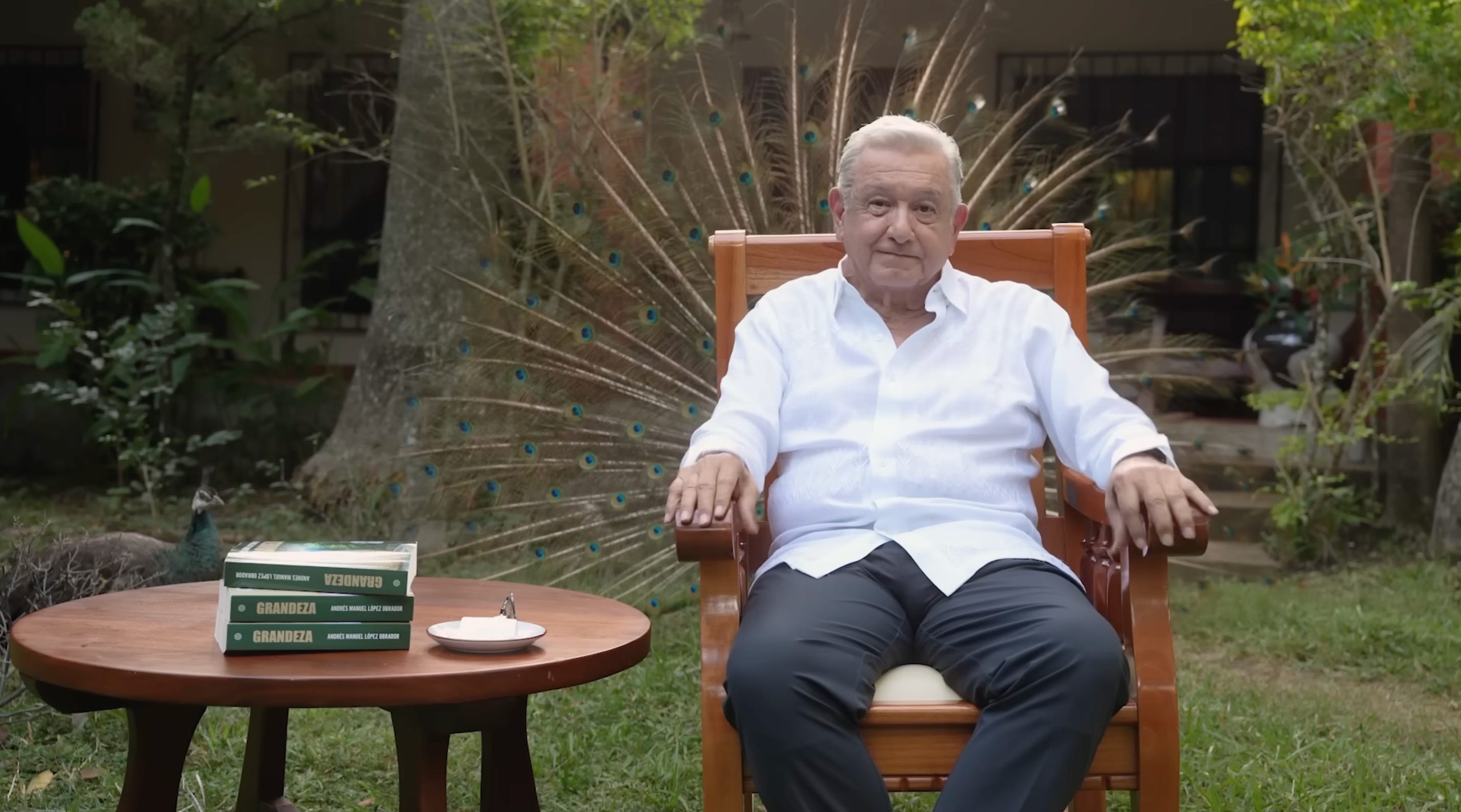
In other news, AMLO emerged from his near-total public absence since Sheinbaum took office in October 2024, posting a 49-minute video filmed at his ranch in Chiapas (“La Chingada”) on Nov. 30. The video has over 971,000 views on YouTube. In his signature style, AMLO meandered through history lesson, political speech and details about his life and family—he emphasized that he really is retired, “it’s not a simulation.” He also announced the publication of his new book, “Grandeza.” As a strutting peacock created a living feathered “penacho” behind him, the former president explained how his book “tells a different story” about Mexico’s ancient civilizations, which he ties into his political philosophy of “Mexican humanism.” His next book will be called “Gloria” and will cover Mexico’s “fertile political history.”
Today, President Sheinbaum was in Washington, D.C. for the World Cup 2026 draw and her first in-person encounter with President Trump. She also met with Canadian Prime Minister Mark Carney, as all three countries look ahead to not only co-hosting the world’s largest sporting event next year, but also the prickly review of—or requiem for—the T-MEC (aka USMCA or CUSMA) trade treaty.
In tonight’s edition, I dive into the national conversation about the resignation of Attorney General Alejandro Gertz Manero and rapid replacement by Ernestina Godoy.
And stay tuned for the next episode of The Mexpat Interview! My conversation with archaeologist Dr. Cristina Valdiosera about the genetic history of the “mestizaje” will land in your inbox on Sunday. If you haven’t listened (or watched) it yet, check out the first episode here.

The queen’s gambit
The tension between principle and pragmatism is one of the reasons that politics makes for great drama. Just ask Shakespeare, or Alejandro Gertz Manero.
President Sheinbaum made a decision last week that, on the surface, appears more pragmatic than principled: a bold move to consolidate her power.
“I offered him an ambassadorship, and he accepted,” the president explained tersely on Nov. 29 in response to the abrupt resignation of the 86 year-old attorney general, who still had two years left in his term. She also noted that he had “accepted, or rather, he named” Ernestina Godoy, the chief legal advisor to the president, as his interim replacement. After a swift Senate confirmation process (with 97 votes in favor, 19 against and 11 null), Godoy was sworn in as the country’s new attorney general on Wednesday.
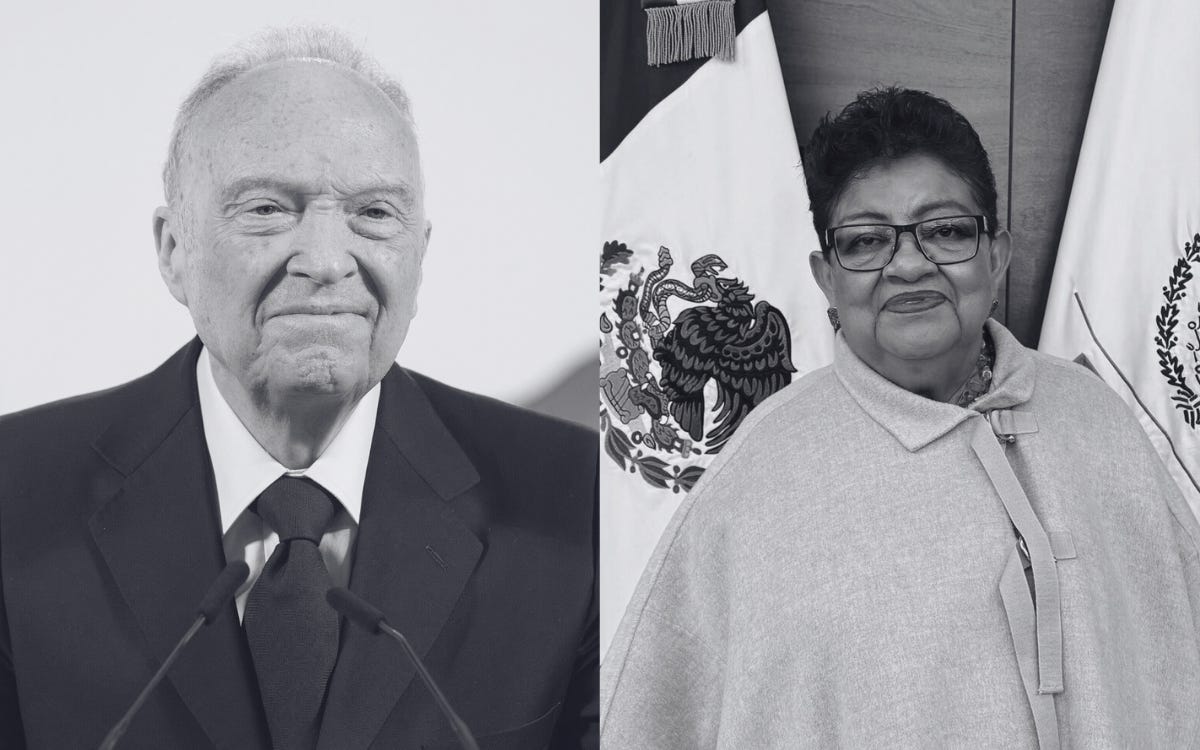
By forcing out Gertz, Sheinbaum has strengthened her hand when it comes to security policy and removed a character it seems few will miss—he was at best, incompetent, and at worst, vindictive and corrupt.
She has also sacrificed the principle of prosecutorial independence on the altar of efficiency. In a country facing powerful organized crime groups and the pressure of a belligerent U.S. administration, she could well argue that delivering results is more important. But this is also a country with a long history of executive abuse of prosecutorial power. In 2018, a reform designed to address this problem—hardly one unique to Mexico—went into effect, creating an independent federal attorney general’s office (FGR), led by an “untouchable” prosecutor who would serve nine years and was protected from removal by the executive. Gertz was chosen as the first to hold this powerful position, but it soon became apparent the FGR had been left in the wrong hands.
The failures of Gertz
Gertz has survived decades as an opaque shapeshifter in Mexican politics—from serving as the country’s first anti-drug trafficking czar under President Luis Echeverría (PRI), to head of security in Mexico City with Mayor Cuauhtémoc Cárdenas (PRD), to federal security chief during the term of President Vicente Fox (PAN).
After becoming attorney general in 2019, he started prosecuting the “mafia of power” that President López Obrador had promised to root out, bringing cases against former Pemex director Emilio Lozoya and others with ties to the Peña Nieto administration. But these cases stalled; he then turned an unseemly amount of attention and resources to prosecuting members of his extended family. His sister-in-law’s daughter, Alejandra Cuevas Morán, spent close to a year and a half in prison on charges of the negligent homicide of Gertz’s brother (who died at age 81 in 2015) before her case was dismissed by the Supreme Court. He also tried to prosecute his one-time friend and ally, Julio Scherer Ibarra, who served as AMLO’s chief legal advisor from 2018 to 2021. Scherer was investigated by the FGR for corruption and money laundering, but he claimed it was a smear campaign orchestrated by Gertz.
Gertz delivered convictions in just 1% of the nearly 500,000 cases opened during his tenure. While this is not unusual in Mexico, where impunity reigns, he oversaw steep declines in both federal investigations and convictions for priority crimes like fuel theft, and he didn’t obtain a single conviction in any of the high-profile corruption cases against former officials.
With his terrible record, blatant ethical breaches and glaring lack of accountability, Gertz could have been removed with just cause years ago.
Why now?
Perhaps it is just cumulative frustration, or concern that he posed a threat to some in the ruling party. Morena Senator Adán Augusto López, who has been mired in suspicion since the arrest of his former head of security in Tabasco, is the one who brought Sheinbaum a document demonstrating why Gertz was no longer fit to serve as public prosecutor last week. The next day, amidst rumors that Gertz might be forced to step down by the Senate, his resignation letter arrived. According to the law, the attorney general can only resign or be fired by the Senate for “serious cause.” This has led opposition lawmakers to protest that serving as an ambassador isn’t sufficiently “serious.”
“It wasn’t a resignation, it was a firing of Gertz, who boasts to us he’s going to be an ambassador, showing us that in Morena everything is negotiable and everyone is dispensable,” said PRI Senator Claudia Anaya.
The details of the document López brought to Sheinbaum’s attention have not been made public.
The dream team
Sheinbaum promised that as president, she would apply the same formula that reduced crime in Mexico City during her mayoral term at the national level—and she has now recreated the same dream team, with Omar García Harfuch and Godoy, who was attorney general of the metropolis during Sheinbaum’s term. The president insists that “greater coordination” with the federal and state attorney general’s offices is essential and doesn’t compromise judicial independence. “With full respect for the great Mexican tradition of euphemism” as former Secretary of Foreign Affairs Jorge Castañeda put it in an op-ed.
And what can be expected of Ernestina Godoy?
Sheinbaum describes Godoy (71) as a woman of “honesty and integrity” and applauded her confirmation as “very good for the country.” Godoy was also close to AMLO and was one of the founding members of Morena. As the attorney general of CDMX, she was lauded for creating a special femicide unit (which did bring increased investigations and convictions) and for strengthening her office’s investigative capacity. Her pursuit of the “cartel inmobiliario” or “real estate cartel” of corrupt officials in the city brought some high-profile arrests, but also made her enemies in opposition political parties who alleged her investigation was politically motivated.
In her first speech as attorney general, Godoy said “the attorney general’s office cannot be a source of illegality” and that “justice isn’t negotiable,” promising zero tolerance for impunity, and the use of torture.
Facing the morass of pending and sticky cases left by Gertz, she has her work cut out for her.
The Mexpat Stat
10.6 million people…
…are registered members of Morena as of November, according to party leadership—by far the most of any political party in Mexico. The National Action Party (PAN) had over 2 million members at its peak, but today has only 319,000 registered members.

Thank you for reading and feel free to send me your suggestions, comments and questions at hola@themexpatriate.com. And please share The Mexpatriate!