


Welcome to The Mexpatriate.
This year of slop and rage-bait ends as it began, with another word of the year: tariffs.
Mexico will be applying a host of new duties on imports—mostly aimed at Chinese products, but also from other Asian countries—starting on Jan. 1. The government says this will protect 350,000 Mexican jobs, and only affects about 8% of Mexico’s total trade. While the CCP may blame Trump for this move, Mexico has its own reasons to be concerned about its ballooning trade deficit with China. The new tariffs target strategic sectors that the government is trying to boost, including the textiles, automotive and steel industries. “It’s not because they [Mexican industries] can’t compete, but because products are coming in priced below international reference prices…it’s not a level playing field,” said Secretary of Economy Marcelo Ebrard.
Speaking of playing fields…
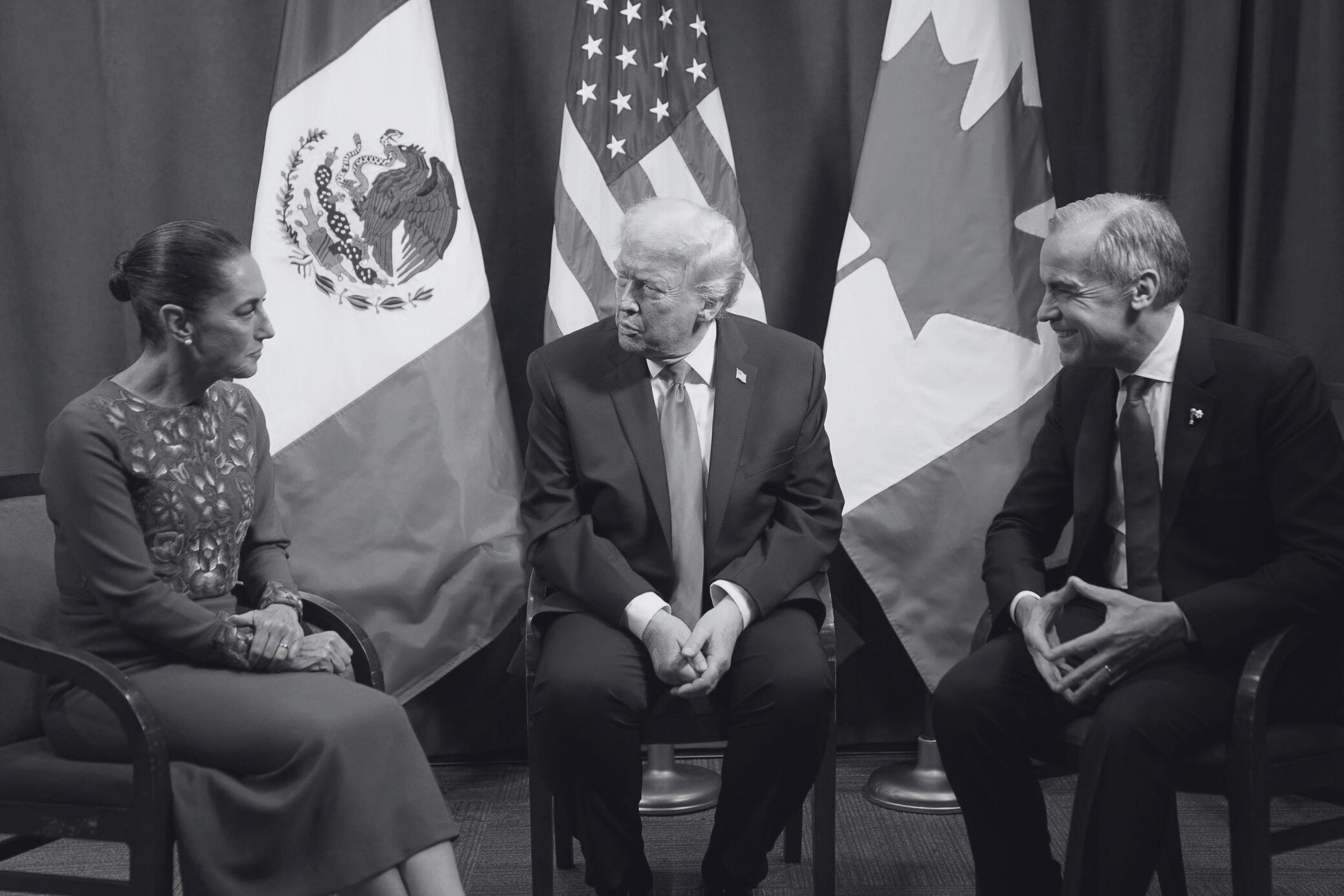
Sheinbaum, Prime Minister Carney and the first recipient of the FIFA Peace Prize convened in Washington for the 2026 World Cup draw on Dec. 5. “There was a lot of respect towards Mexico,” said Sheinbaum of her first in-person encounter with Trump, who said they “mostly talked trade.” This cordial meeting hasn’t tempered the menacing tone of the White House, however. Mexico’s water debt under the 1944 bilateral treaty returned to the Trump Truth Social tariff threat agenda, with Sheinbaum promising increased deliveries to fulfill Mexico’s obligations, though “we’re not giving water we don’t have.” This week, Trump signed an executive order categorizing fentanyl as a Weapon of Mass Destruction, in keeping with the war on terror playbook. Sheinbaum responded that her government’s “vision about how to address drug use is different.” She also offered to act as a mediator in the escalating U.S.-Venezuela conflict (peace prize optional).
In other news from the national conversation this month:
The minimum wage will be raised 13% in 2026, bringing the daily pay rate to 315 pesos (440 pesos in 43 border zone municipalities). As the 4T continues to push its labor-forward agenda, the long-discussed reform to reduce the work week from 48 to 40 hours (by 2030) also looks like it will be approved in January.
Viva Aerobus and Volaris announced a merger agreement to form a new airline group on Dec. 18 that will “advance the democratization of travel in Mexico.” Between the two of them, these low-cost carriers cover over 70% of domestic air travel and combined, would become the largest national airline (their closest competitor is Aeroméxico). The merger is subject to approval by anti-trust regulators, but is expected to close by the end of next year.
Claudia Sheinbaum was dubbed one of The New York Times’ 67 Most Stylish People of 2025, along with Bad Bunny and Pope Leo XIV. Sheinbaum was the only sitting head of state to make the list, and told reporters credit should go to the Indigenous artisans whose embroidered garments she often wears, calling them “the pride of the nation.”
Senator Adán Augusto López made the news again, but this time not for suspicions of organized crime connections, but for a rather large book purchase. López bought about 17,000 copies of AMLO’s new book “Grandeza”—he says he negotiated a “special price”—as gifts for his fellow Morena legislators (which comes out to about 260 books each). That’s a lot of stocking stuffers.

The Mexpat Wrapped
This is my 64th newsletter of the year. I’ve published news digests, deep dives, a travelogue and 10 interviews (the last three as part of my podcast launched in November).
I am so grateful to the people who have supported me along the way, and to all of my readers—with a special thanks to paid subscribers! If you want to help me grow this newsletter, please consider upgrading.
And if you’re looking for something to read in between wrapping presents, tippling ponche and singing carols, here’s a playlist of 10 reader favorites (in chronological order) from 2025:
“I see these hardline Republicans as being right about two things, and wrong about one thing. They’re right to say that fentanyl is a really bad issue—that needs to be at the forefront—for the U.S. to figure out how to reduce overdose deaths. They’re right that cartel violence is a serious problem, that Mexico and the U.S. both need to be concerned about. But they’re wrong that these problems can be solved by a military strike.”
“While Sheinbaum’s cool-headed, ‘Keep Calm and Carry On’ strategy seems to be working for Mexico—for now—the energy being expended around the world to get inside Trump’s head is so massive it could probably power ChatGPT for a week (or DeepSeek for a year). Should Trump be taken seriously, or literally, or just with a big grain of salt and a stiff drink? After all, we’re only three weeks into four years.”
“As mentioned above, State intervention in the Mexican economy is nothing new, though it had spent about three decades in remission before AMLO’s win in 2018. Morena’s sweep into power coincided with resurgent economic nationalism around the world and AMLO brought a nostalgic (and to some, worrying) statism back to Mexican politics. For Sheinbaum’s ‘second story’ of the transformation, the State seems to be getting a more technical 21st-century rebrand.”
“Musicians find themselves in a delicate position: face possible legal action for glorifying violence, or face the wrath of their fans. A concert by Sonoran singer Luis R. Conriquez at a Texcoco festival devolved into chaos on April 11 after he told the audience he wouldn’t be singing some of his trademark ‘corridos bélicos.’ The furious (and likely intoxicated) crowd trashed the stage.”
“Many people are still nervous about holding their money digitally. A large share of the population prefers to use cash to avoid taxes or because they’re in the informal economy. Around 80%–85% of transactions under 10,000 pesos are still done in cash—much higher than in Brazil or Colombia for example.”
“But even if the intention behind this constitutional reform was to radically overhaul a judicial system that many Mexicans view as corrupt and inefficient, the election may end up bringing less substantive change than the reformers or the defenders of the judicial system anticipate.”
“The words of U.S. Treasury Secretary Scott Bessent, quoted in the June 25 press release announcing ‘historic orders’ targeting three Mexican financial institutions, conjure images of shady men in suits conspiring with thugs; but when I think of Intercam or CIBanco, I see gray-haired gringos in socks and sandals, carrying a manila envelope under one arm and a small dog under the other.”
“Other examples of government-backed national LLM projects include China’s Deepseek, Chile’s Latam GPT and France’s Mistral—whose chatbot Lucie was taken offline at the beginning of the year after starting to blabber about ‘cow’s eggs’ as a ‘healthy and nutritious food.’ Hopefully Mexico’s chatbot won’t start recommending huevos de vaca as part of a balanced diet.”
“The last great call to democratic duty, to elect the nation’s judiciary, got a paltry 13% of Mexican voters to participate. Polls indicate that about half of Mexicans are satisfied with how their democracy functions, but as Morena pushes for more elections and referendums, they might also be starting to suffer from chronic democracy fatigue syndrome.”
“From filling in potholes to digging up unmarked grave sites searching for lost loved ones, Mexicans have long found themselves burdened with tasks that should fall to their government. While Morena has won broad popular support and delivered results (particularly economically), this deep undercurrent of frustration could still bubble up into a potent opposing force.”
Wishing you a happy, healthy holiday season and I can’t wait to share what’s next for The Mexpatriate in 2026!
